
The Overwhelmed Parent’s Guide to Cups for Older Kids
Supporting oral function, healthy habits, and independence — without the overwhelm.
As your child grows, their oral needs, feeding skills, and daily routines change — but the cup aisle doesn’t get any simpler. By preschool and early school‑age, kids need cups that support mature oral function, safe swallowing, hydration habits, and independence without reverting to old sucking patterns.
This guide is your clear, clutter‑free roadmap.
The TL;DR
Best everyday choices: open cups, flip-top, recessed lid, or free‑flow straw cups.
Limit/avoid: hard spouts, bite valves, and cups requiring hyper-suction.
Goal: confident open‑cup drinking across all meals & environments.
Habits: steady hydration, paced sipping, and support of oral function (lip isolation, labial rounding, tongue position and movement) + rest posture (tongue up, lips closed, nasal breathing).
Why Cup Choice Still Matters for Older Kids
Oral patterns don’t magically "age out." If a child continues to use cups that promote sucking or biting, those patterns can linger and affect:
Tongue posture (tongue resting low or forward instead of up to the palate)
Lip seal and facial muscle balance
Swallowing coordination
Facial and dental development
Speech sound development (especially if the tongue stays low or forward)
Drinking pace and airway safety
Choosing cups that promote mature sipping supports healthy oral motor skills, breathing patterns, and self‑regulation.
What Older Kids Need From a Cup
By toddlerhood through school age, kids benefit from cups that:
Encourage tongue‑to‑palate elevation
Promote gentle sipping rather than sucking
Allow controlled flow without valves or bite-activated mechanisms
Fit their larger hands and growing independence
Withstand daily use — lunchboxes, sports, school, outings
Support pacing so they don’t gulp air and allow time for breathing coordination
Quick Buy Checklist (for Kids 2–7+)
Look for:
Open cups: lightweight stainless steel or silicone-lined, easy to grip, stable base.
Straw cups or bottles: free‑flow straw, soft or silicone top, removable parts that clean thoroughly.
Larger capacity: 8–12 oz for young kids, 12–16 oz for school-age.
Durability: dishwasher-safe, no hidden valves, no complex lids.
Leak-control options: flip-top, slider, or gasket caps (mechanical seals—not suction valves).
Limit/avoid:
Hard spouts (often encourage tongue thrust or suckling patterns)
Bite-activated straws or valves
"No-spill" designs that require continuous suction
Cups your child chews on instead of sips from
Age & Stage Roadmap (Older Kid Edition)
2–3 years
Use open cup at meals.
Straw bottles for on-the-go.
Reduce reliance on spill-proof lids.
3–5 years
Expect growing independence.
Practice sipping—not gulping—through a short, soft straw.
Introduce larger open cups with stable bases.
5–7+ years
Regular use of open cups for all meals.
Straw cups or flip-top for school, sports, and travel.
Focus on hydration pacing and nasal breathing.
Common Questions
“Is it bad if my child still uses a sippy cup?”
Not "bad," but not ideal. Older kids benefit greatly from cups that support tongue elevation, lip seal, and sipping rather than sucking.
“Why does straw drinking matter at this age?”
Straw drinking can support strength and coordination of the lips, cheeks, and tongue and trend toward mature swallowing. It can also helps regulate drinking speed.
“My child chews their straw—what does that mean?”
Often, they're seeking sensory input or compensating for instability. Switching to an open cup, recessed lid cup, or one with a wide mouth while working on jaw stability can help.
“What about cups for sports?”
Look for flip-top straw bottles or wide mouth opening that deliver flow without requiring suction. Avoid bite valves.
My Practice Standard for Older Kids
Open cup at all meals — supports mature swallowing + oral rest posture.
Straw bottle for school and sports — free-flow, soft straw, easy-clean.
Teach pacing — small sips, swallow, breathe.
Reinforce oral rest posture between drinks — tongue up, lips closed, breathe through the nose.
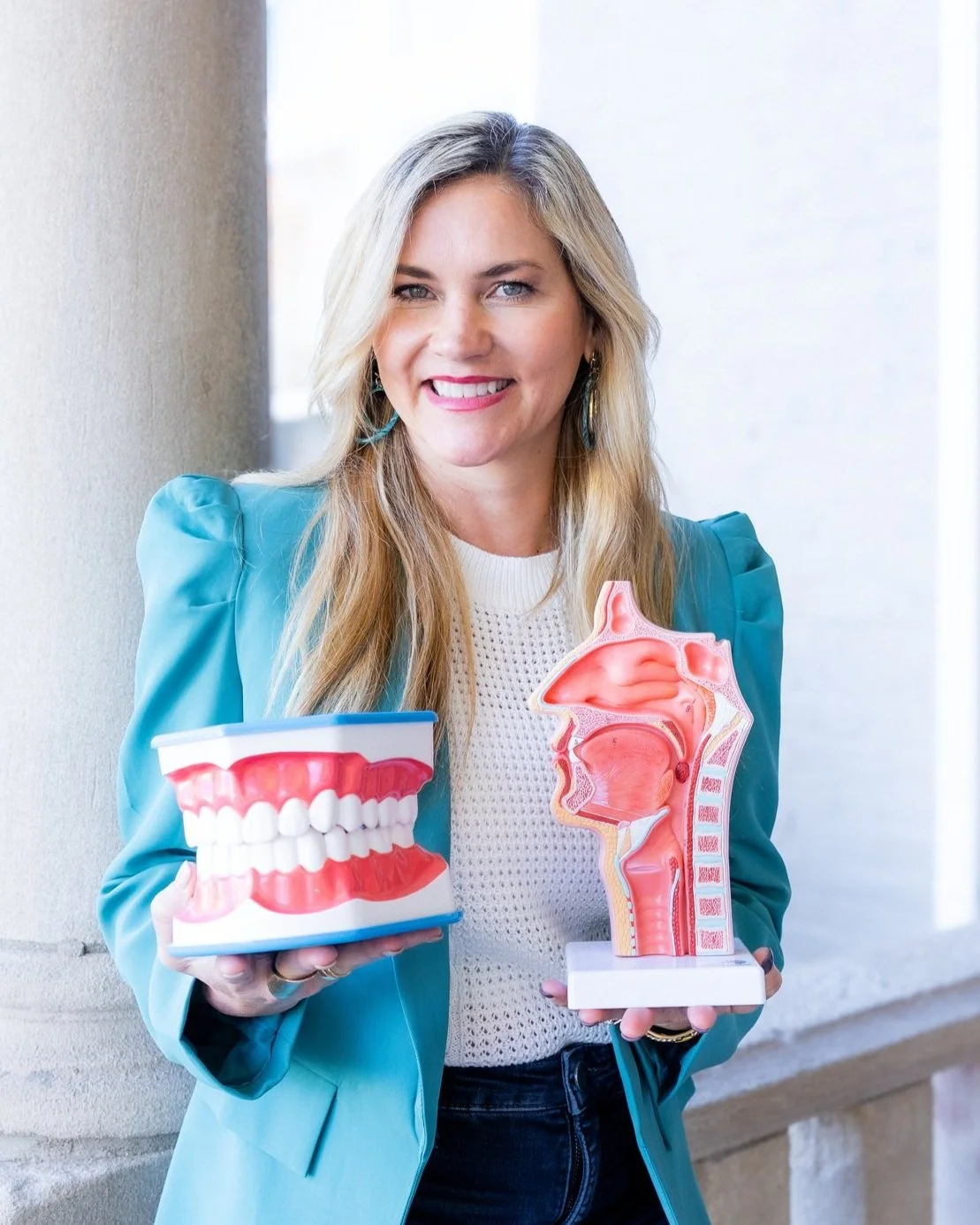
Empowered Milestones
with
Amanda Chastain
MA, CCC-SLP, COM